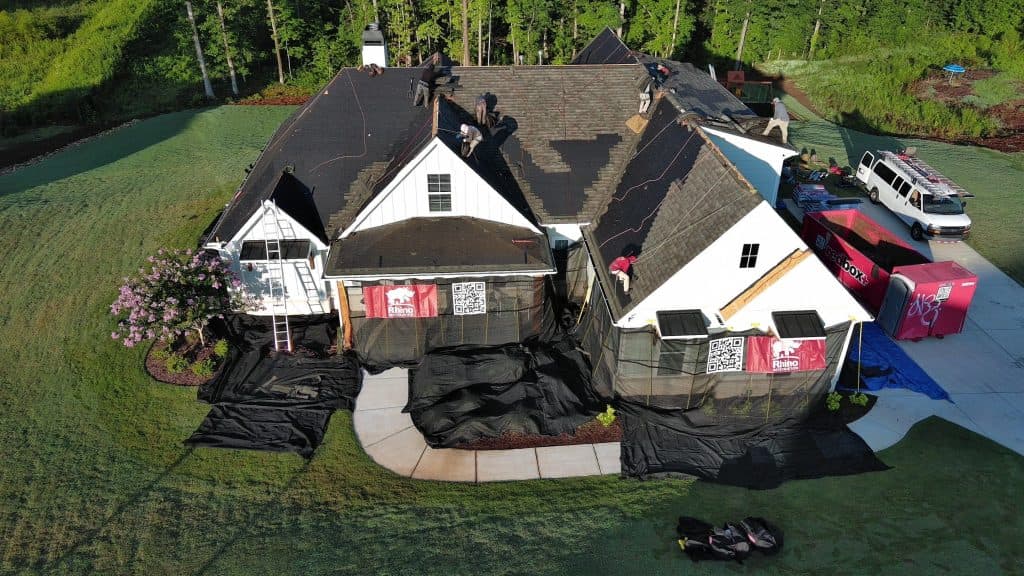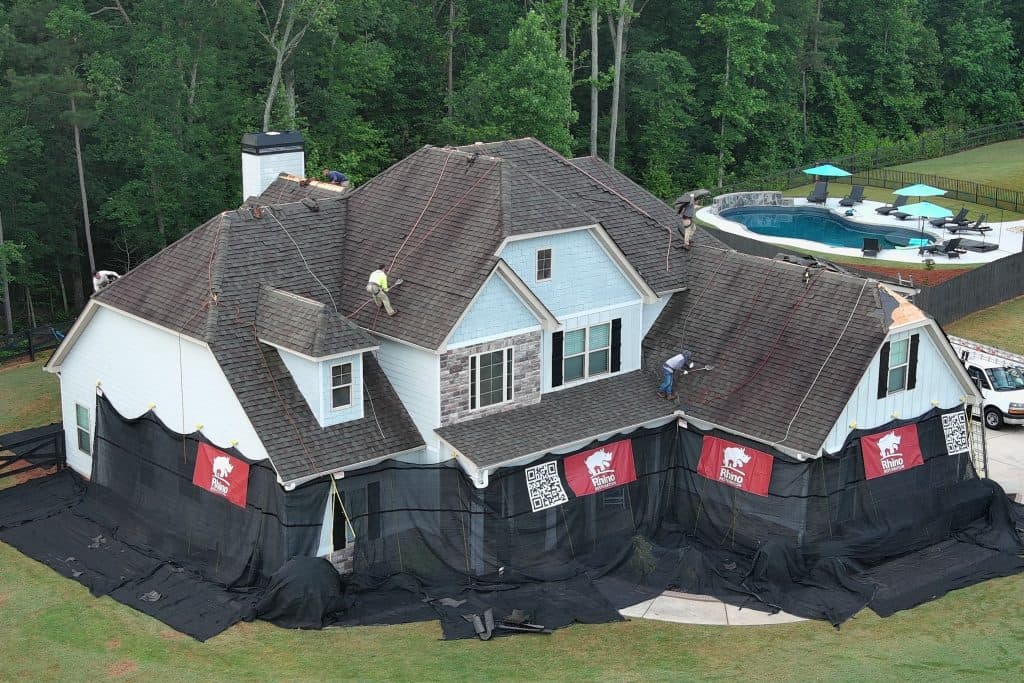
Storm repair needs documentation and a permanent plan.
After a storm, the roof may look fine from the ground while shingles, ridge cap, flashing, or gutters are damaged above. The first inspection should document what happened and identify whether the roof is exposed.
Woodstock storms can be localized. One neighborhood may see wind and hail while another gets heavy rain only, so the inspection needs to focus on the actual roof, not assumptions.
What we look for
We check missing shingles, creased tabs, bruised shingles, damaged ridge cap, bent vents, lifted flashing, punctures from debris, gutter impacts, and interior water signs. Tree damage also requires checking decking and framing around the impact area.
Repair or replacement after storm damage
Some storm damage is isolated and repairable. Severe, widespread, or insurance-approved damage may lead to replacement planning. We explain the difference and provide a written scope for the next step.