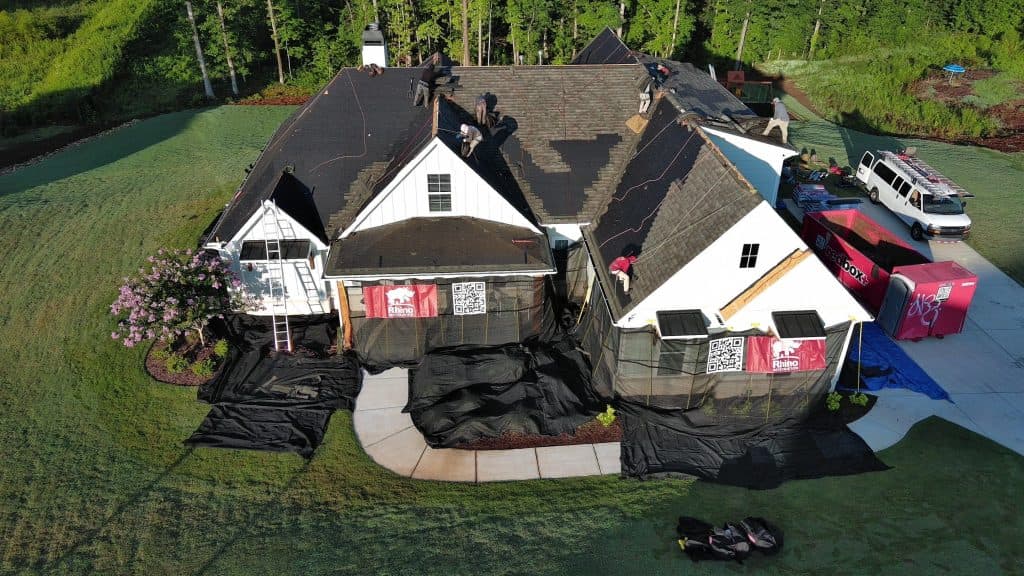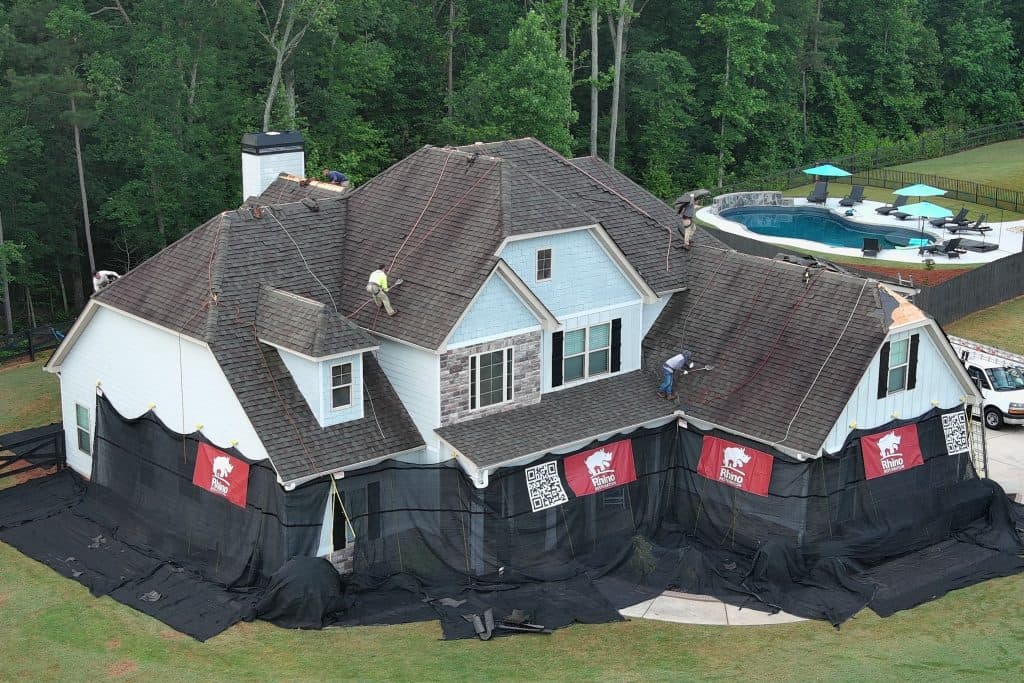
Emergency roof repair starts with dry-in.
When a roof is open, the immediate goal is simple: keep water out. That may mean a tarp, temporary flashing, temporary shingle repair, or another dry-in method depending on the damage and weather.
After the roof is protected, we can slow down and document the permanent repair scope. That keeps emergency decisions from becoming rushed permanent decisions.
Storm and tree damage
Woodstock storms can bring high wind, falling limbs, and heavy rain in the same event. A small opening can soak insulation and drywall quickly, so temporary dry-in matters even when the permanent repair will happen later.
What happens after the emergency visit
Once the roof is stable, we inspect the surrounding roof, document damage, check for related issues, and write a scope for permanent repair or replacement. If insurance is involved, the photos and scope help clarify the conversation.