Roof Leak Repair in Marietta, GA Done at the Source
The hardest thing about roof leaks isn't fixing them, it's finding them. Water runs along rafters, top plates, and the underlayment until it finds drywall to soak. The stain on your ceiling is almost never directly under the actual leak. This is why so many roof leak repairs fail. The previous roofer fixed what looked like the leak (the spot directly above the stain) instead of the actual entry point upstream.
We start in the attic with a flashlight and follow the water trail back to where it's actually getting in. Once we've found the source, the fix is usually straightforward. Most of our repairs hold for the life of the roof.
The Most Common Sources of Roof Leaks
Failed pipe boot gaskets
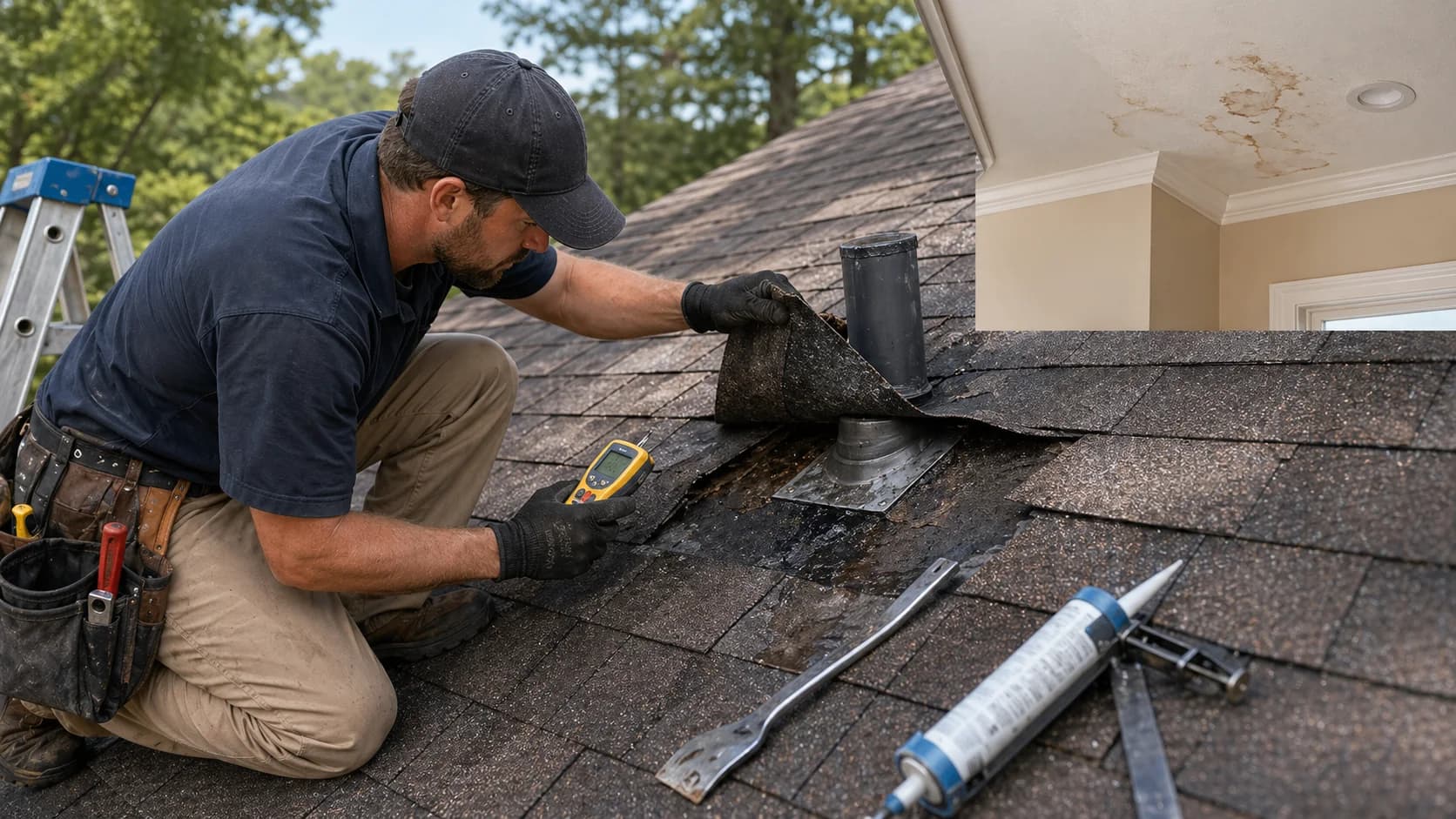
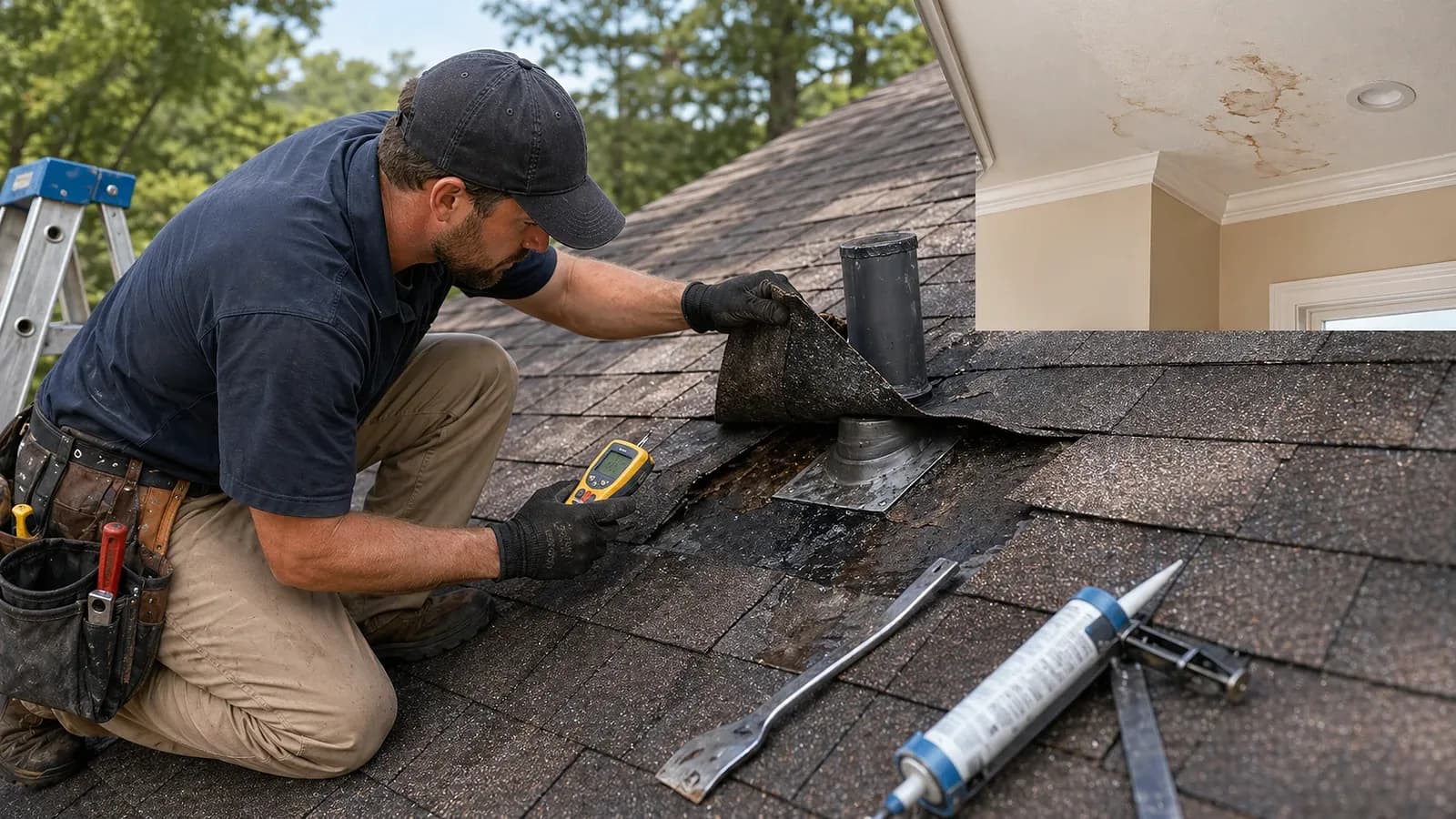
Plumbing vent stacks come up through the roof with a rubber boot sealing the penetration. The rubber dries out and cracks at year 8 to 12. Pipe boots cause more leaks in Cobb County than almost any other source. Easy to miss from the ground, easy to fix once you know.
Chimney counter flashing
Counter flashing is the metal piece tucked into a mortar joint on the chimney. Over time the mortar pulls back, the flashing pulls out, and water sneaks behind. Chimney leaks usually announce themselves as water stains on a top-floor wall or ceiling near the chimney chase.
Skylight flashing kits
When a roof gets replaced and the skylight flashing isn't replaced too, the interface between old flashing and new shingles becomes a leak. We see this constantly on re-roofs done by other contractors.
Wall and headwall flashing
Where a roof slope meets a vertical wall, there should be step flashing woven into each shingle course and counter flashing covering it from above. Continuous L-flashing (a single bent piece running the length of the wall) doesn't work and always leaks.
Valley wear or improper installation
Valleys carry the most water on the roof. Worn metal valleys, lifted closed-cut valleys, or missing ice-and-water underlayment all cause leaks that show up as ceiling stains in the rooms below the valley line.
Failed sealant at protrusions
Old caulk and roof tar dry out and crack. Anywhere the previous roofer relied on caulk to seal a gap, that's a future leak.
How We Trace and Repair
Step one: attic walk-through with a strong flashlight. Look for water stains on the underside of the decking, rusted nail tips, daylight where there shouldn't be any, and damp insulation. Trace the water trail upstream to the highest point.
Step two: roof confirmation. Once we have a likely entry point, we go on the roof and verify. Lift shingles, inspect flashing, photograph the actual cause.
Step three: fix at the source. New pipe boot, new step flashing, new valley metal, new ice-and-water underlayment, whatever it takes. We don't smear roof tar over the symptom.
Step four: water test. Once we've made the repair, we run a hose to confirm. We don't pack up until we know it's dry.
What Roof Leak Repair Costs in Cobb County
Most leak repairs run $300 to $1,200 depending on what we find and what it takes to fix it correctly. Pipe boot replacement is on the low end. Full chimney re-flash on the high end. Decking replacement (when leaks have rotted the sheathing) adds material cost. Insurance often covers sudden leak damage from storms but not gradual long-term wear.
Why Some Leak Repairs Fail
Almost always because the previous repair addressed the symptom, not the source. A leak that comes back after a repair means the original entry point is still open. We trace properly, fix the cause, and back our repairs with a 5-year workmanship warranty in writing.
Get a Free Leak Diagnostic
Call (678) 720-3565 or use the contact form. Free roof and attic leak diagnostic with photo report. Most leak calls in Cobb County visited within a few days. Same-day or next-day for active leaks during a wet stretch.